Use your prices and your pantry
Write down the packages you actually need to buy for each dinner. Check usable amounts at home first; do not subtract ingredients already reserved for another meal.
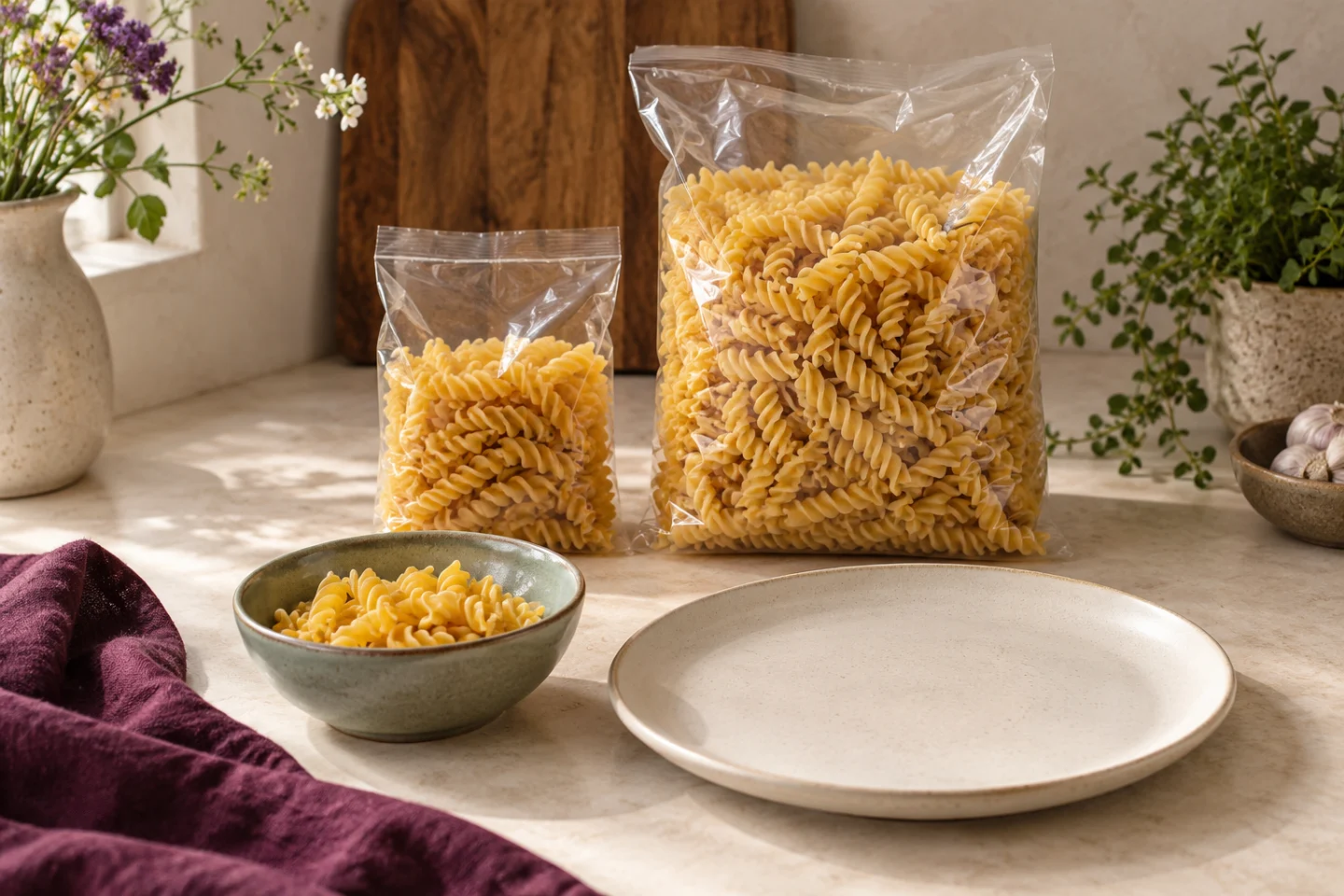
Then estimate the share of each package used. Label the result as ingredient cost, not the amount you will pay today.
Work through one basket
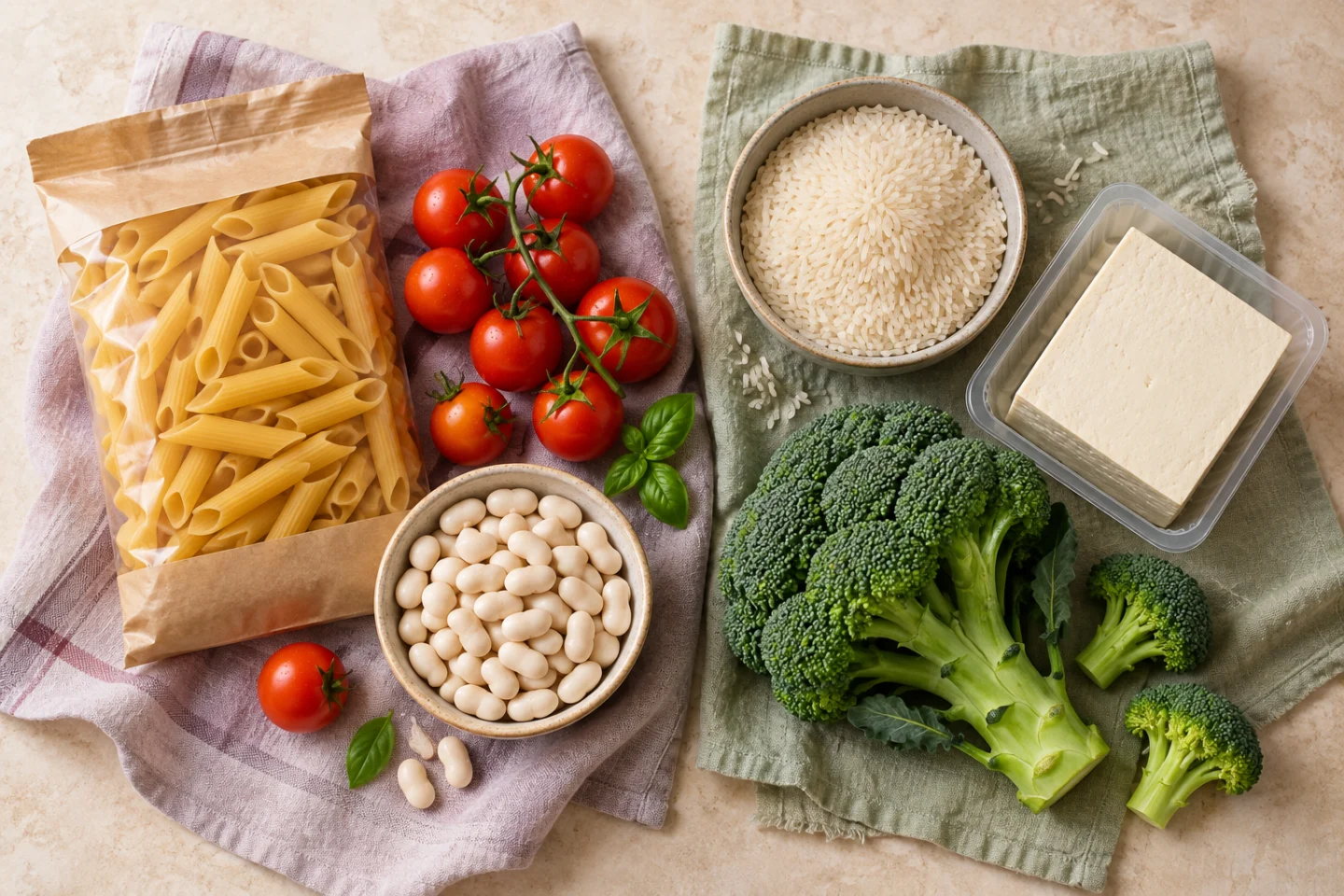
These are invented prices for arithmetic, not current grocery prices. Suppose two servings need 200 g pasta, one tin of beans and one tin of tomatoes.
| Item | Checkout cost | Amount used / allocated cost |
|---|---|---|
| 500 g pasta bag | $2.00 | 200 g / $0.80 |
| One tin beans | $1.50 | Whole tin / $1.50 |
| One tin tomatoes | $1.20 | Whole tin / $1.20 |
| Total | $4.70 | $3.50 before oil and seasoning |
Compare like with like
The illustrated basket costs $4.70 at checkout, or $2.35 per planned serving. The ingredients used cost $3.50, or $1.75 per serving, before oil and seasoning. Those are different questions with different answers.
Make the same calculation for the alternative dinner, including ingredients omitted from this simple example. If you will not use the remaining pasta, do not treat its spare value as money recovered.
Use the checkout figure when deciding what fits today’s grocery allowance. Use allocated ingredient cost when comparing recipes over repeated meals, with a realistic destination for the rest.
Reviewed by WeekPlated editorial. Our editorial approach