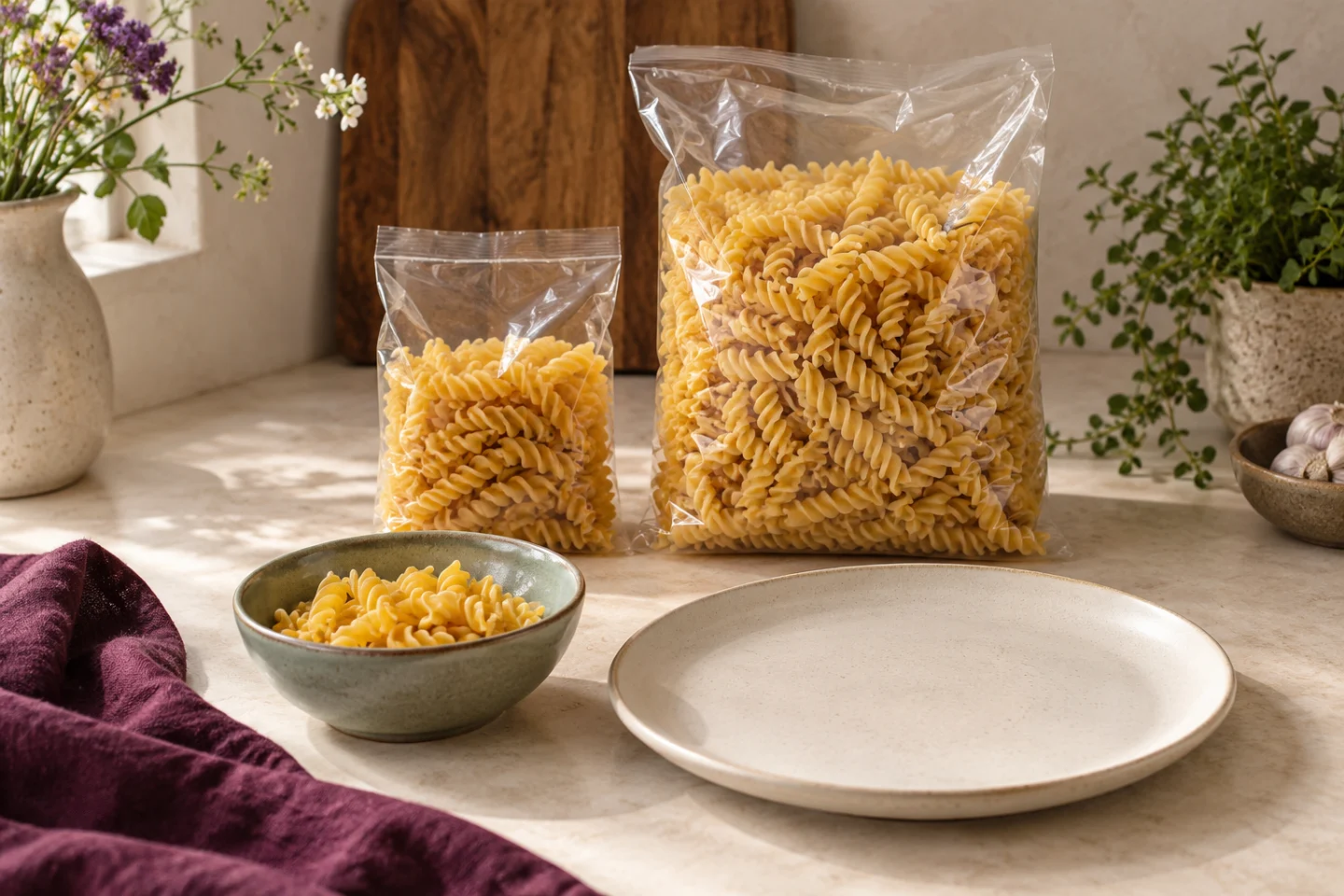
Put both packs on the same scale
Divide price by weight, then multiply by 100 for a price per 100 g. Use comparable products: dry beans and cooked beans aren’t a straight weight-for-weight swap.
Here’s a made-up price example, not a claim about your local shop.
| Pack | Price | Per 100 g |
|---|---|---|
| 400 g | $2.40 | $0.60 |
| 1 kg | $5.00 | $0.50 |
Now check the dinner plan
The big pack has the lower unit price. But if you need 400 g and have no plan for the rest, the small pack costs $2.40 today; the big one costs $5.
If you’ll use the whole kilo, that changes the decision. Count that use only if it’s realistic for you, with suitable storage and enough time to use the ingredient.
Give the extra an actual job
Before buying more, name the second dinner that needs it. “I’ll probably use it” has bought a lot of ambitious vegetables.
For pantry staples you regularly finish, a larger pack may make sense. For an unfamiliar ingredient, the smaller one can be the easier choice. Use your quantities and prices, not the size of the sale sign.
Reviewed by WeekPlated editorial. Our editorial approach