
Choose what belongs in the shared basket
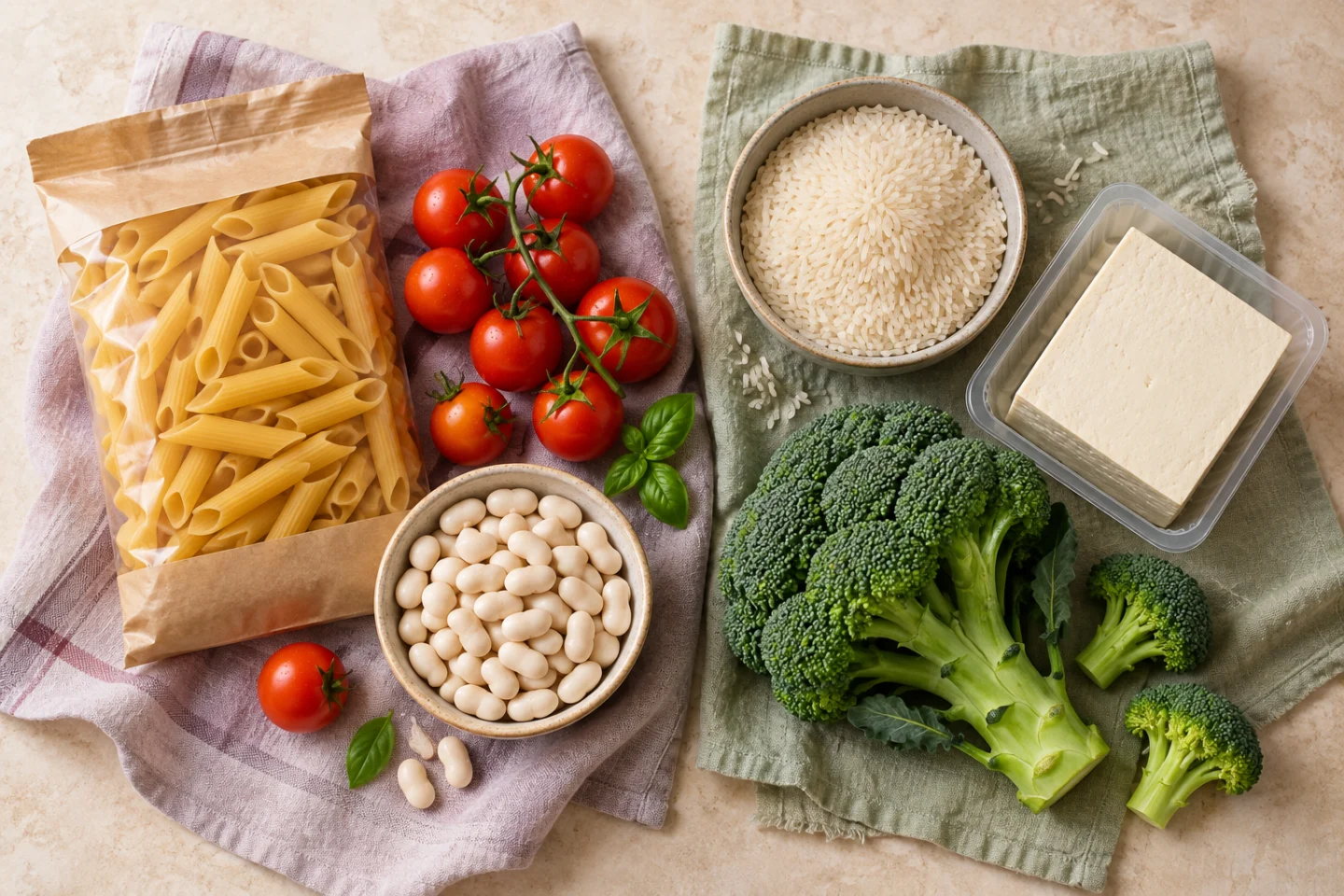
For some households, all dinner ingredients are shared and lunches are individual. Others share staples but buy special extras separately. Either can work if the boundary is clear beforehand.
Decide how to handle a new item before the next shop. Do not wait until somebody is defending a jar of expensive olives at the kitchen table.
Check a simple receipt
Here is an invented two-person example with no taxes, discounts or delivery fees: shared dinner groceries cost $36, Alex’s personal extras cost $8 and Sam’s cost $6. The full receipt is $50.
With an equal split of the shared groceries, Alex owes $18 + $8 = $26 and Sam owes $18 + $6 = $24. Together those amounts return to the $50 receipt.
| Person | Shared part | Personal part | Total |
|---|---|---|---|
| Alex | $18 | $8 | $26 |
| Sam | $18 | $6 | $24 |
Record exceptions once
If the receipt includes fees, tax, discounts or returned items, agree how those affect the shared and personal portions, then check that the final shares still add up.
Write down who paid and the agreed reimbursement. Use a method everyone can see; WeekPlated is not being presented as a bill-splitting or banking tool.
Review the rule when household circumstances change. This example demonstrates arithmetic, not a claim that equal splitting is right for every household.
Reviewed by WeekPlated editorial. Our editorial approach