Find the steps that must wait
Pasta cannot cook before its water boils. A sauce cannot simmer before its ingredients reach the pan. Mark those dependencies before adding all the printed minutes together.
Include preparation and finishing: washing vegetables, chopping, draining and serving still occupy somebody’s evening.
Try a small parallel plan
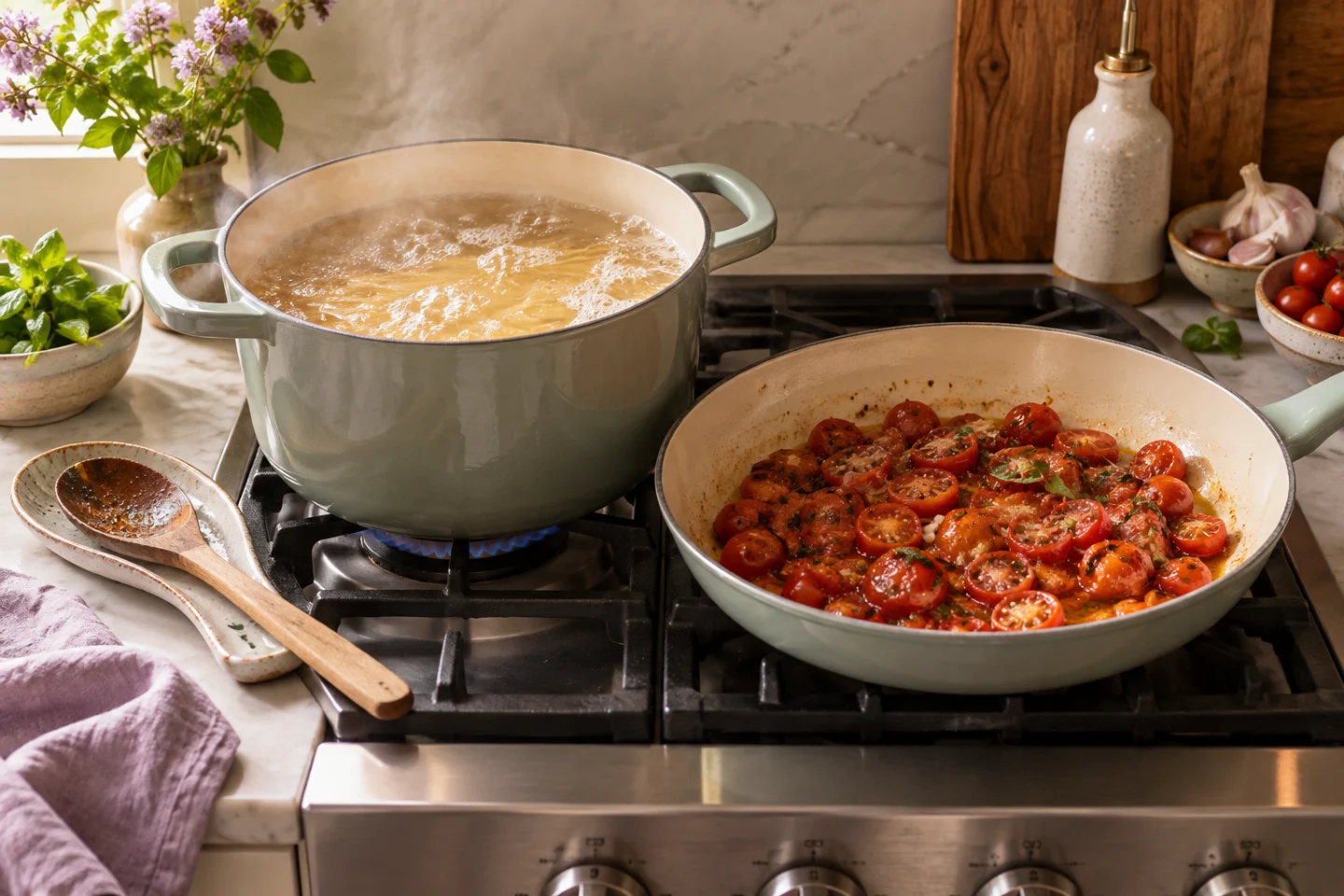
Here is an illustrative pasta-and-tomato-sauce sequence, not a tested cooking schedule. Use your recipe’s quantities, heat guidance and doneness cues; your water and equipment may take longer.
| Stage | Main task | Possible overlap |
|---|---|---|
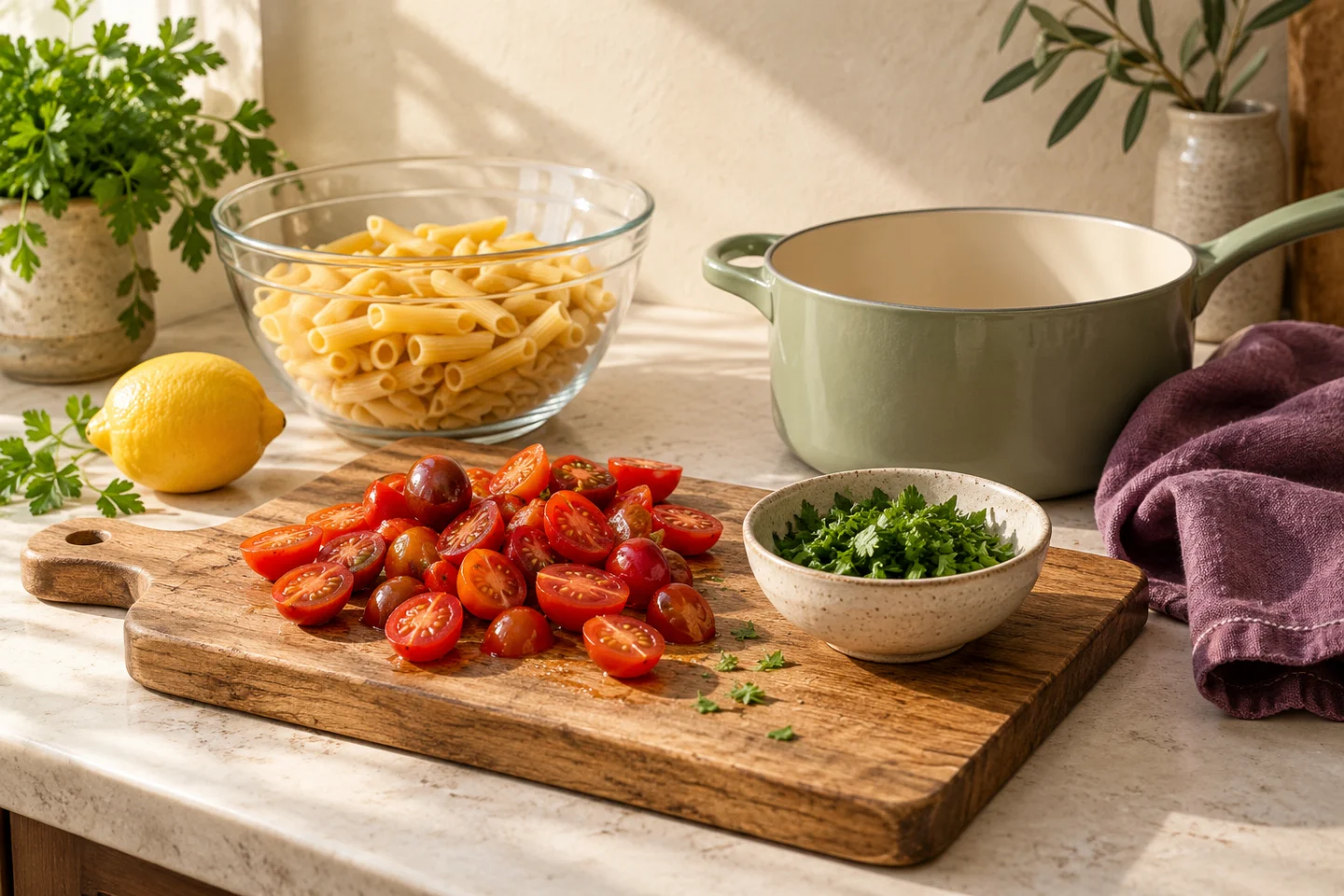
| Start | Put the pasta water on | Prepare the sauce ingredients |
| Water boiling | Add pasta and set its timer | Start the sauce if preparation is ready |
| Pasta nearly ready | Check both textures | Set out bowls if neither pan needs attention |
| Finish | Drain and combine | Adjust sauce, then serve |
Protect the attention-heavy moments
Do not assign chopping to a moment when you also need to stir a fast-cooking pan continuously. Parallel tasks only help when they leave enough attention for safe cooking.
If a step slips, adjust the finish time or use the recipe’s safe stopping point. Do not raise every burner to maximum to argue with the clock.
After cooking, note the stage that took longer than expected. Next time, change the order or allow more time for that stage instead of assuming every recipe estimate fits your kitchen.
Reviewed by WeekPlated editorial. Our editorial approach