Count work and waiting separately
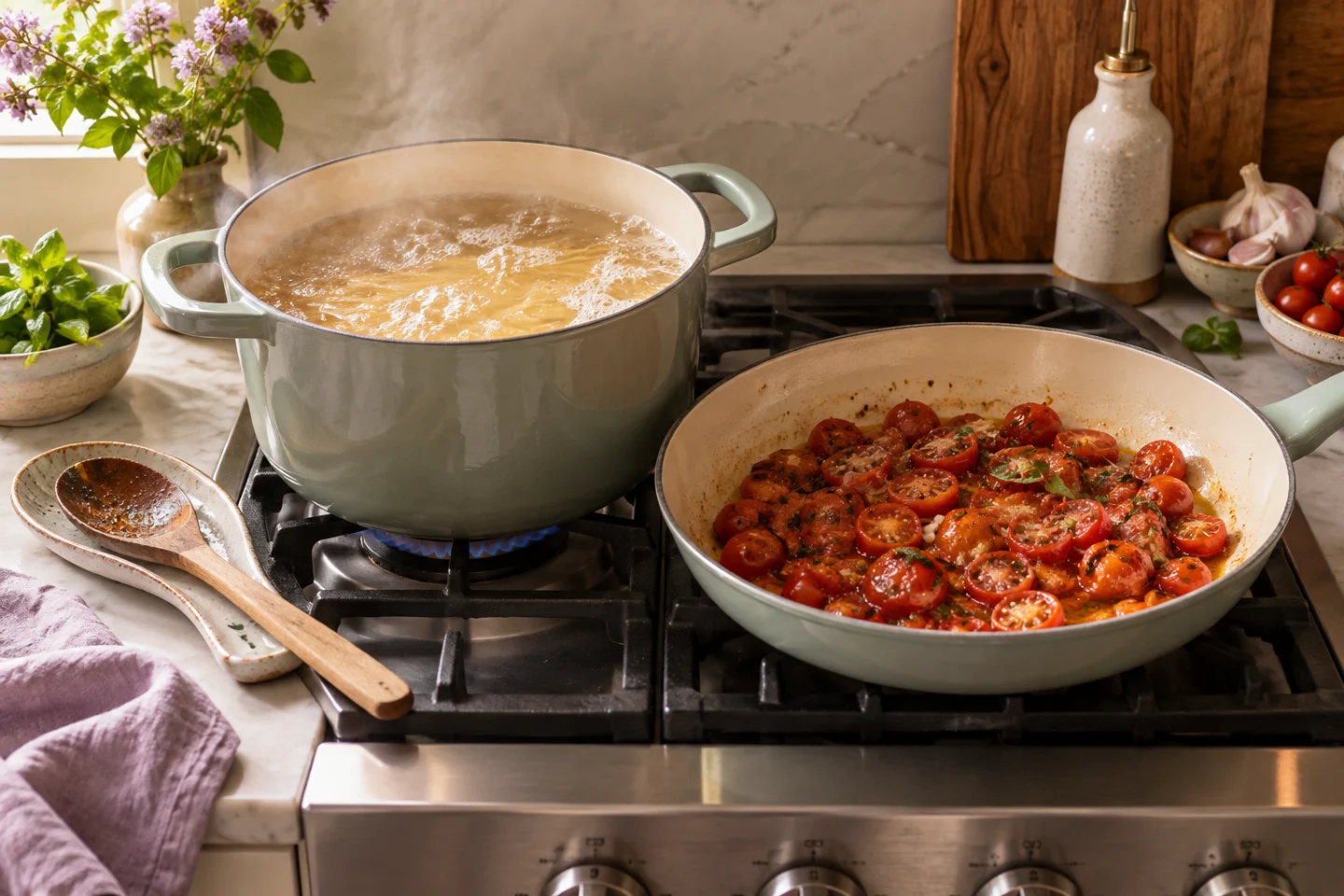
Hands-on time includes washing, peeling, chopping, measuring and stirring that needs your attention. Elapsed time also includes passive waits such as oven preheating or a covered simmer.
Some work can overlap with waiting, but only if the recipe order and your equipment allow it. Two overlapping ten-minute tasks do not automatically take twenty minutes, and they do not automatically take ten either.
Read a worked estimate
Imagine ten minutes of preparation, twenty minutes in the oven and five minutes to finish and serve. If nothing overlaps, allow at least thirty-five minutes, plus any preheating not already included.
If the oven heats while you prepare, some of that wait may overlap. If the oven needs longer than the preparation, the remaining preheat still adds time.
| Stage | Illustrative time |
|---|---|
| Preparation | 10 minutes |
| Roasting | 20 minutes |
| Finish and serve | 5 minutes |
| Sequential total | 35 minutes, plus any extra preheat wait |
Look for preparation hidden in nouns
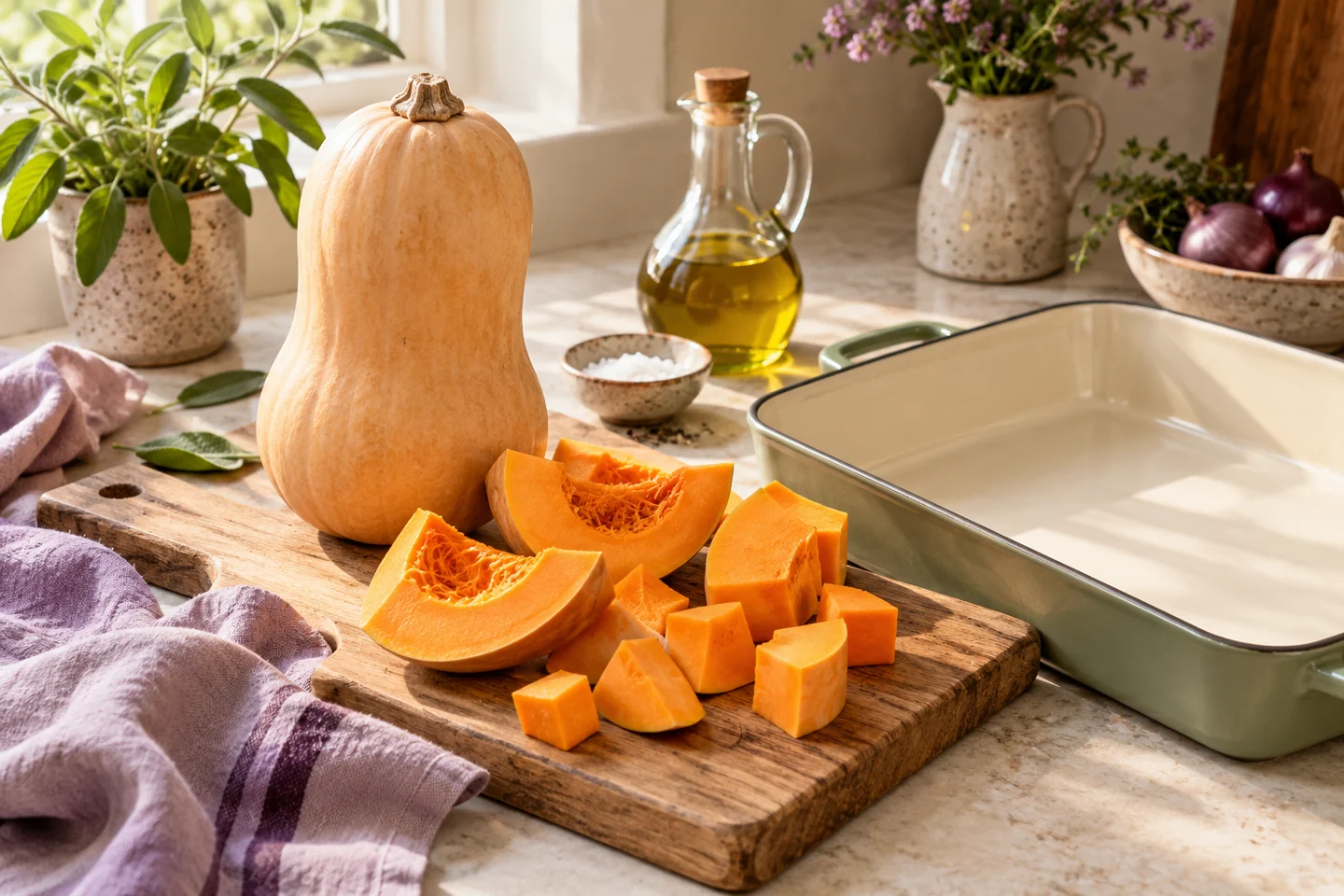
“One onion, finely diced” describes work unless you have already done it. So do “thawed”, “cooked rice” and “roasted peppers”. Check those words before trusting the headline estimate.
For a new recipe, leave a little margin and use the stated texture or doneness cues. Record your actual timing after cooking; your kitchen’s results are more useful than treating an estimate as a deadline.
Sources & further reading
Reviewed by WeekPlated editorial. Our editorial approach