Match the form before the name
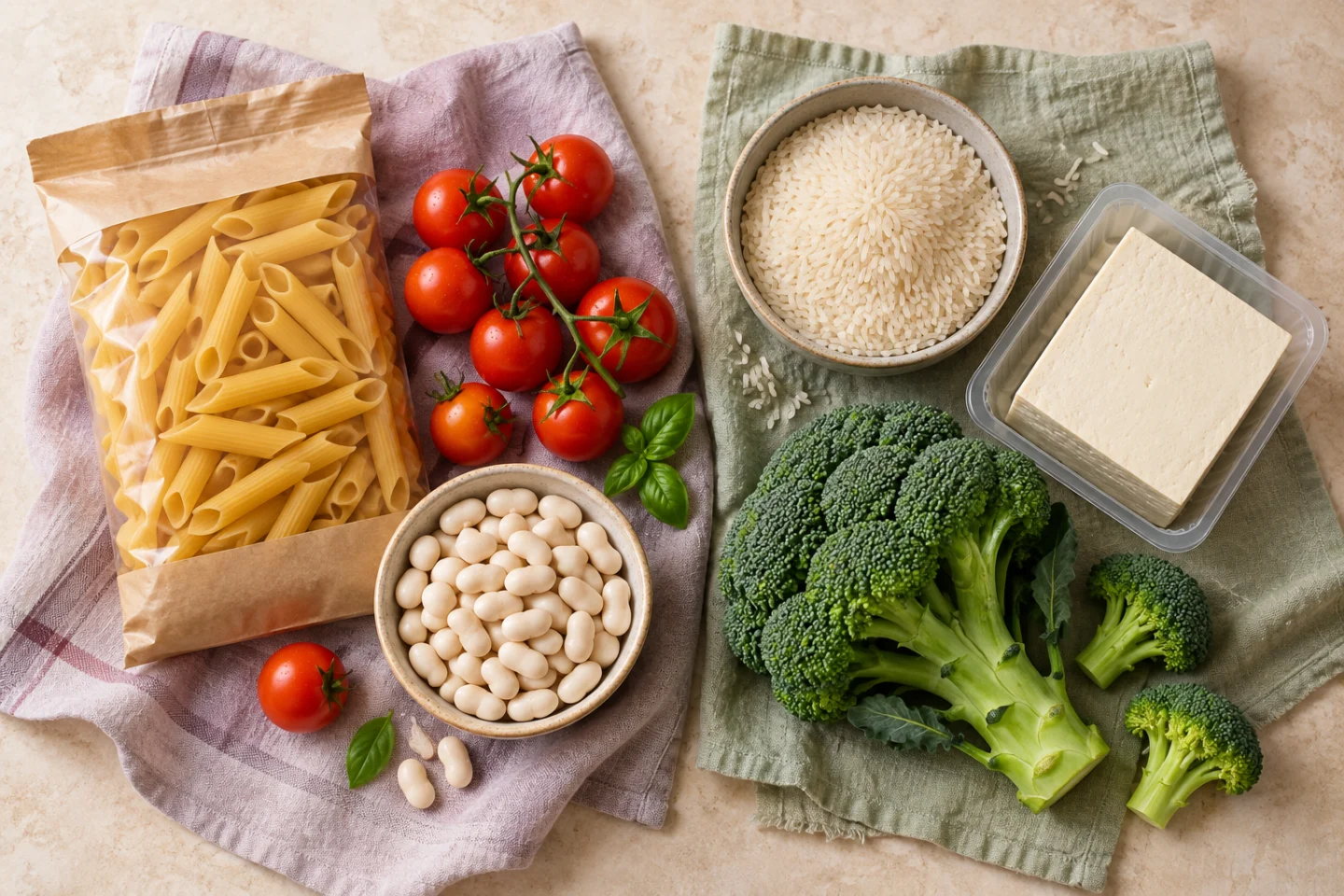
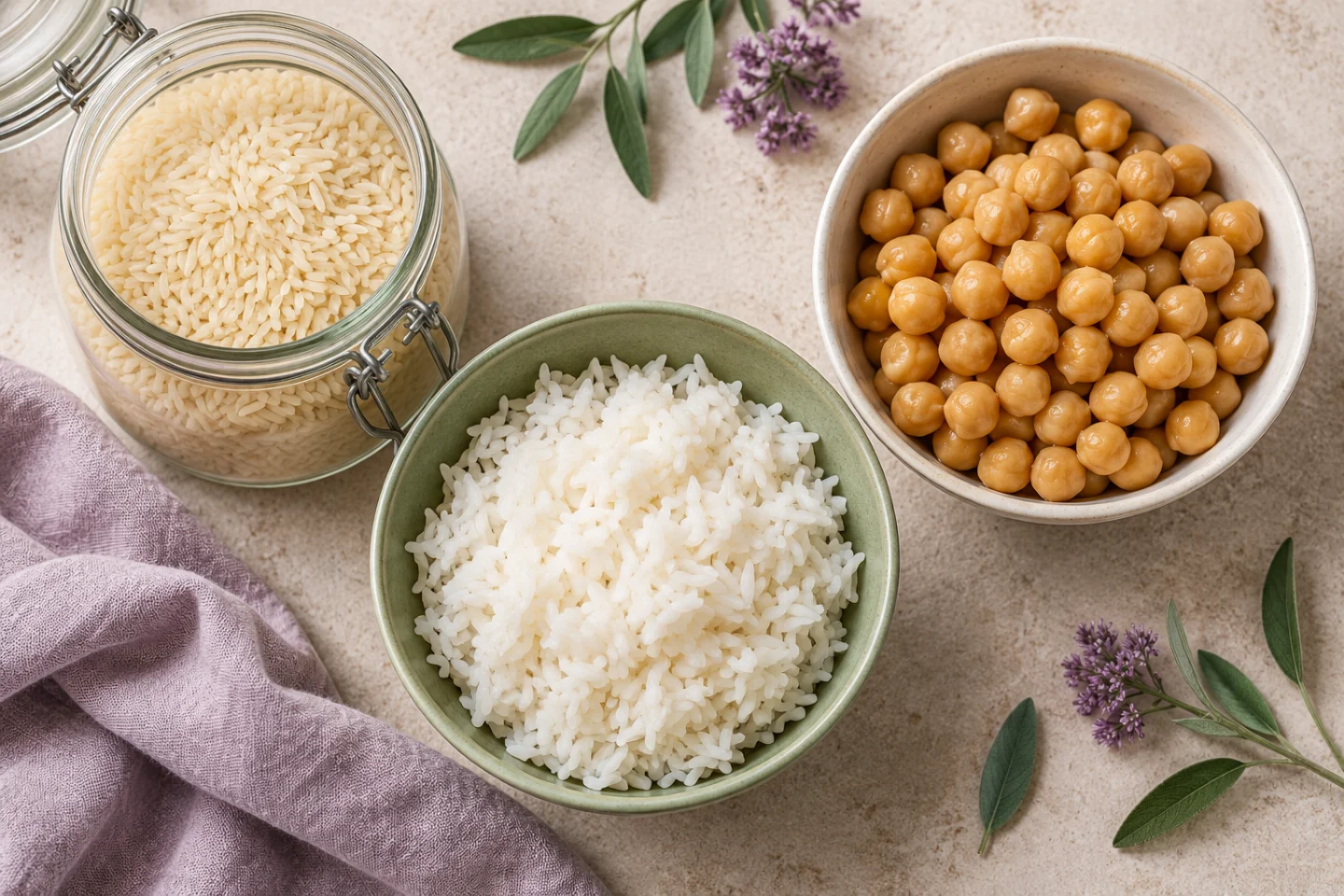
Read the words around the ingredient: dry, cooked, drained, chopped or frozen. Those words affect what you are measuring and what the shopper needs to buy.
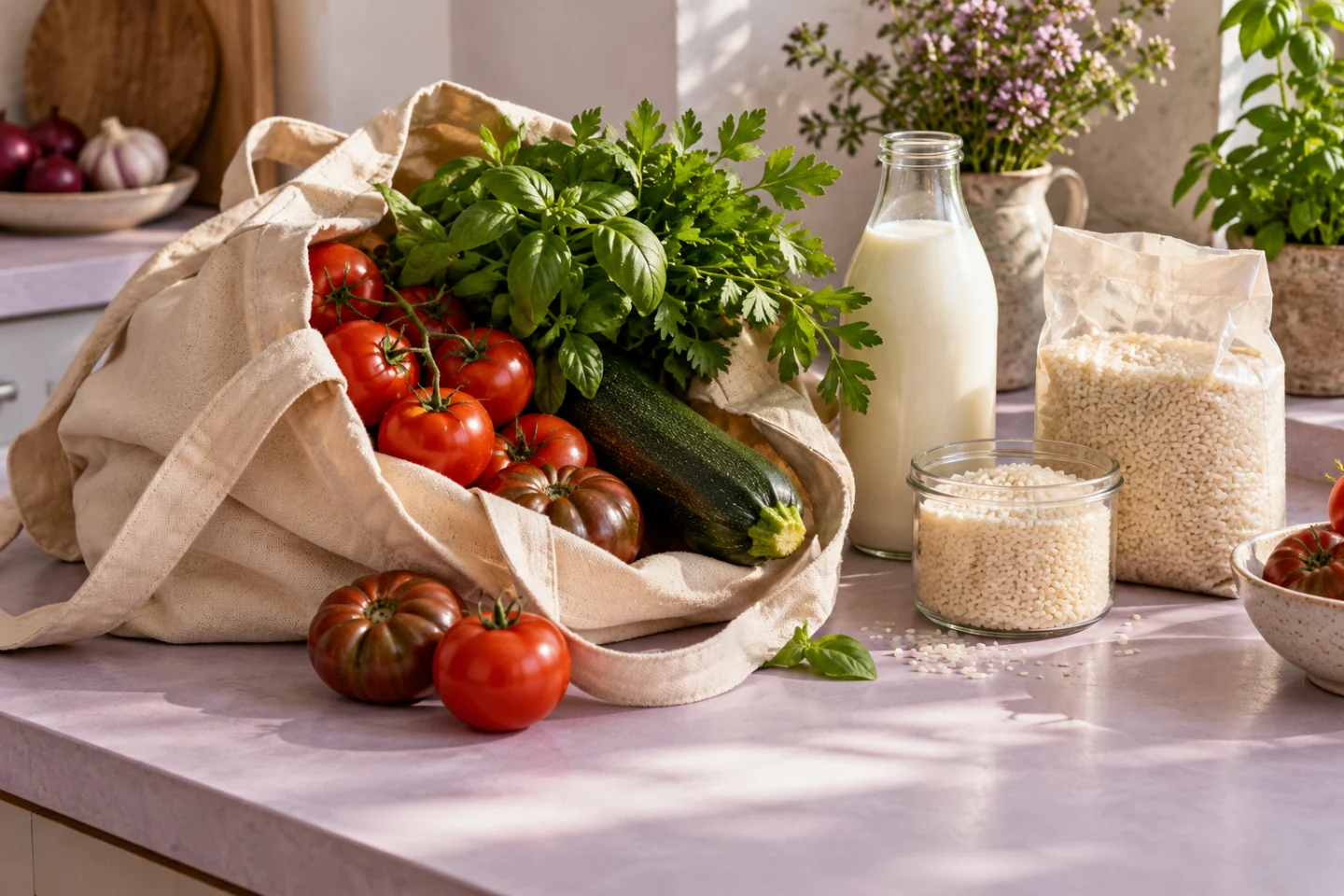
Keep fresh tomatoes and tinned tomatoes separate unless you have deliberately revised the recipes. A shared name does not make them the same shopping item.
Add only what you can compare
Two recipes needing 150 g and 200 g of dry rice require 350 g dry rice. A third calling for 200 g cooked rice needs its own conversion based on the rice and cooking method.
For beans, compare drained requirements with the drained weight on the can, where provided. The front-of-can net weight can include liquid you will discard.
| Recipe amounts | List decision |
|---|---|
| 150 g dry rice + 200 g dry rice | 350 g dry rice |
| 200 g cooked rice + 150 g dry rice | Resolve cooked-to-dry yield first |
| 240 g drained beans + 240 g drained beans | 480 g drained beans required |
Leave uncertain conversions visible
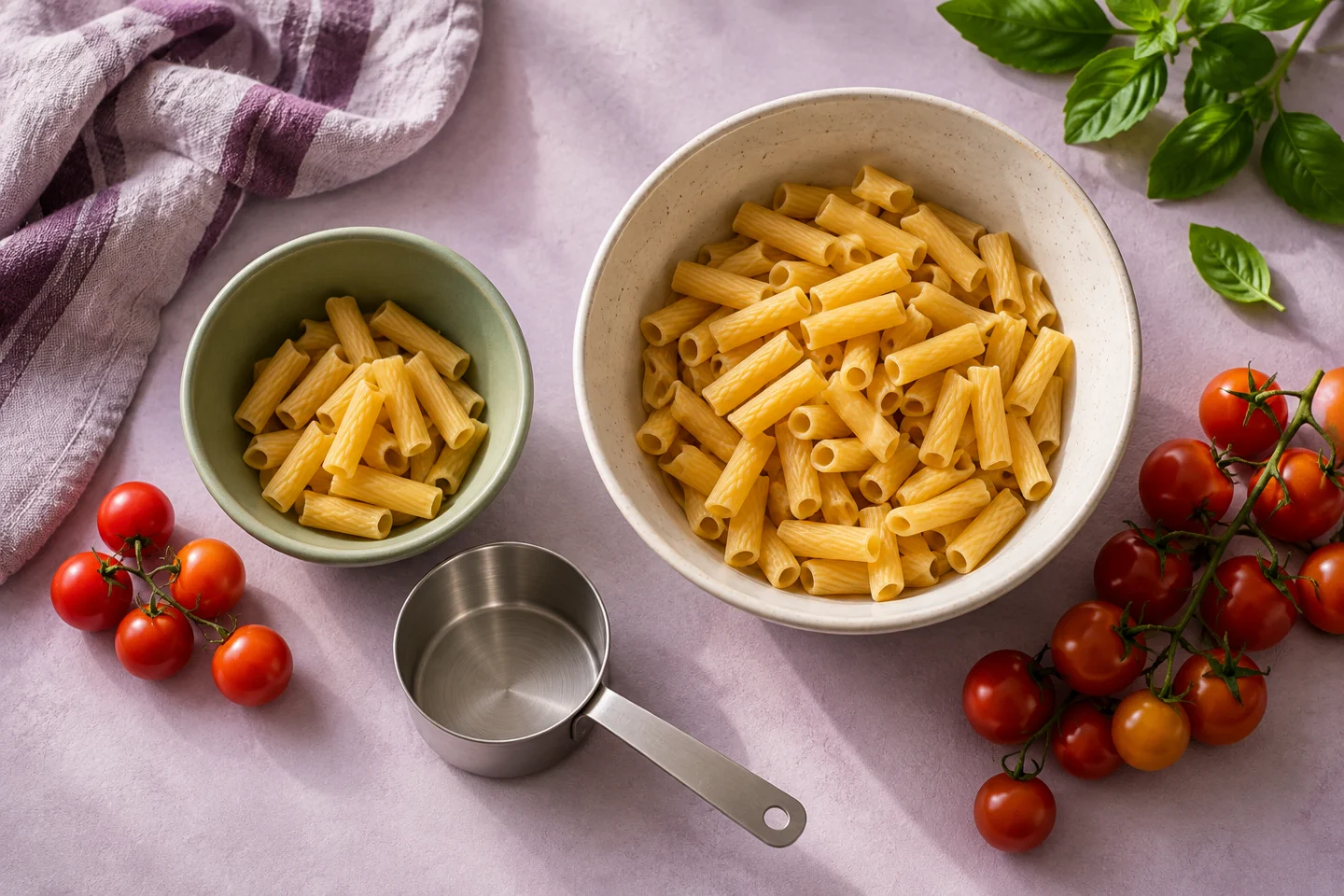
Use the package or a reliable ingredient-specific reference when a conversion is necessary. A cup measures volume; grams measure mass, so there is no universal cups-to-grams number.
After combining compatible amounts, subtract usable pantry stock once. Keep the original recipe amounts available so a changed dinner can be removed without guessing.
Reviewed by WeekPlated editorial. Our editorial approach